



Neuroscience Fact: Intense cravings usually peak within 10 to 15 minutes. This sensory exercise completely breaks the brain's obsessive neural loops by forcing your nervous system back into the physical present moment.

Discussion Topics

Here, you will find statistics showing the success rates of each of the recovery programs represented above. As you peruse the information, please be aware that these are not the only recovery programs available. However, for the purpose of clarity and the ease of interpreting data, we will discuss the three programs, Alcoholics Anonymous ®, Celebrate Recovery®, and the approach of neuroscience (knowing the way our brains naturally work and using that to our advantage.) We will not discuss a particular neuroscience program - although quite a few exist - since the basic information is available and we can work with a general understanding of the neuroscience (or biometric) approach without discussing a paid program.
TextAlso provided are comparisons and descriptions of the three approaches along with and information to help you create a more solid approach your sobriety than the single-pronged approach that so many fail to achieve success with!
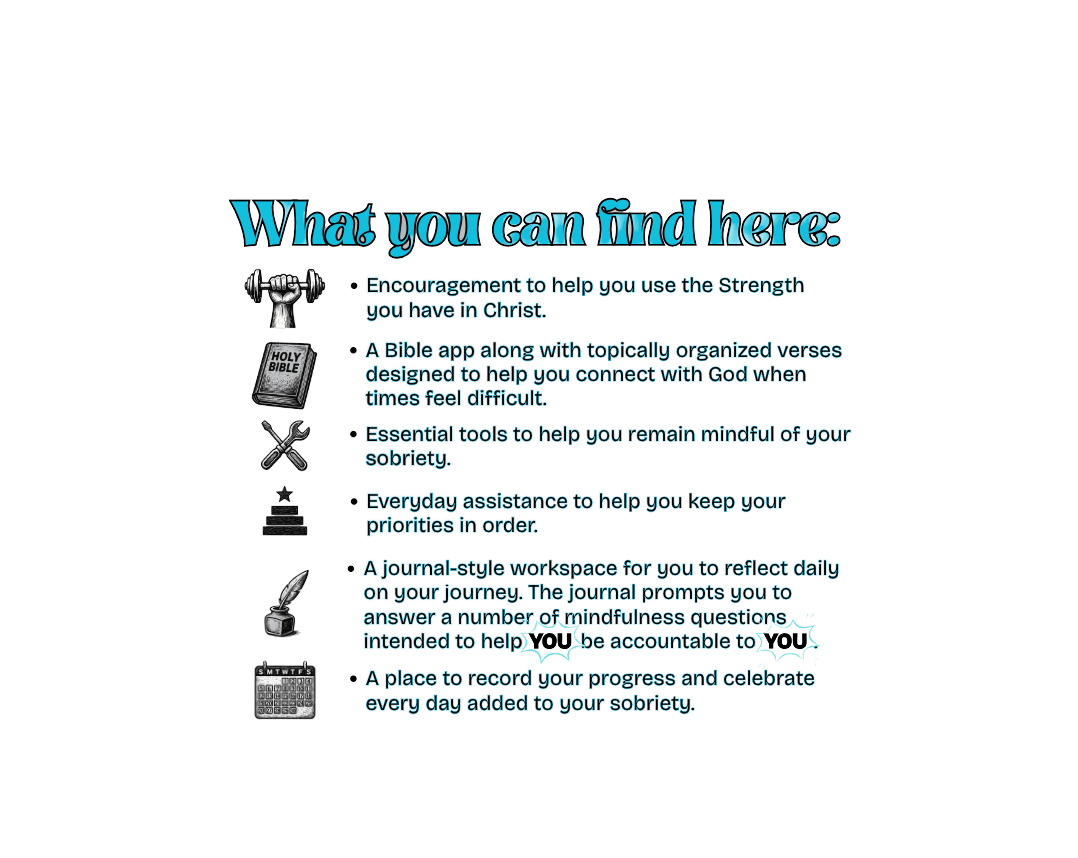
Methods to assist you when cravings come, and resources for supporting a sober lifestyle.

Comparing 3 of the Main Approaches to Recovery
This table to below shows the basic rates of success for each of the three main approaches to recovery. As you consider which of the programs may be right for you, these may help you create a plan for sobriety that will have a lasting effect on your life.Overall, it is clear that a single-pronged approach to recovery is not an overly successful approach. Later, however, when a person seeking sobriety approaches their recovery using a combination of approaches, the odds of success increase dramatically.*
| Feature | Alcoholics Anonymous (AA) | Celebrate Recovery (CR) | The Neuroscience Method |
|---|---|---|---|
| Core Driving Force | Peer-to-Peer Fellowship | Christ-Centered Scripture | Biological Brain Rewiring |
| Primary Goal | 100% Lifelong Abstinence | Healing "Hurts, Habits, & Hang-ups" | Cortisol & Dopamine Regulation |
| Target Audience | Open to anyone wanting to stop drinking | Christians struggling with any life issue | Analytical or habit-focused |
| General Success Rate (All Attendees) | ~5% to 10% (Due to high initial, voluntary dropout rates) | ~5% to 12% (Similar retention curve to traditional 12-step programs) | ~81% to 91% (Initial digital/app engagement and usage) |
| CommittedSuccess Rate (Active Members) | ~42% continuous abstinence at 1 year (Stanford/Cochrane Data) | Strong proportional success linked directly to length of stay | ~91% experience a significant reduction in alcohol use within 90 days |
*Important to note: There are dozens of different programs to choose from. Often people find that one suits their specific desires or lifestlys better than another. If you don't find that one works for you, don't give up. Look for another that fits best. Sobeiety may no be easy, but it IS worth it.
Alcoholics Anonymous (AA)
AA experiences a "high-dropout, high-yield" statistical curve showing that the people who visit the program stay and continue the “steps” and experience longterm sobriety. However, many of those do not stay. (The Big Book suggests that those who drop out early are not ready for sobriety.)The Drop-Out Curve: Because it is free, anonymous, and lacks formal intake, roughly 40% of newcomers drop out within the first 30 days, and up to 90% drop out before reaching one full year. This creates the heavily cited 5% to 10% general success rate.The Success Rate: For people who stay in the program after the first year, find a sponsor, and actively work the 12 steps, the Cochrane Review found a 42% continuous abstinence rate, outperforming standard talk therapy (Cognitive Behavioral Therapy).
Celebrate Recovery (CR)
The Verified Success: Studies tracking CR participants show that program completion and long-term sobriety are directily correlated to the length of time a person remains active in the program.For individuals who complete CR’s 12-month step-study groups, the success rate is about the same as those who remain active in AA (roughly 40%) after remaining for at least a year.Also important to note, it has a uniquely high rate of emotional healing due to treating the family's "co-occurring hurts" alongside the addiction.For a Christian, CR’s approach may provide a slightly more comfortable journey because CR directly involves God (in Name) in the process rather than the “Higher Power” AA attendees refer to.
Understanding the Neuroscience
The Neuroscience Method*The Short-Term Success Rate: Short-term success rates are high due to the dopamine “rush” that the “gamified” interface offers users.App analytics show that 91% of active users achieve a significant reduction in drinking within the first 90 days.Long-Term Data: Data that are available show that 81% of users successfully alter their automatic behavioral responses within the first 60 to 180 days.Because structured neuroscience apps are relatively new on the scene, very little analysis of the long-term success exists.*It is important to note that the focus of most of these programs is REDUCED use, not abstinance.
The BasicsThe neuroscientific approach to works by treating drinking as an over-learned habit that needs to be broken and working to rewire our brains and create new neural pathways. This is different from the traditional “talk therapy,” (the 12-step approach) which treats drinking as the symptom of deeper underlying psychological issues, such as unresolved trauma, relationship distress, or emotional patterns. Traditional talk therapy explores why we want to drink based on your history, the neuroscience approach targets how our brains physically react to alcohol.Neuroscience approaches attempt to remove the stigma and feeling of moral failure. The idea is that once we realize a craving is a temporary chemical misfire rather than a personal failing, the urge to drink loses its psychological power. Instead of weekly or bi-weekly sessions as intervention, we begin to manage our brain’s habits and functions on a real-time basis.
The Neuroscience Method*The Short-Term Success Rate: Short-term success rates are high due to the dopamine “rush” that the “gamified” interface offers users.App analytics show that 91% of active users achieve a significant reduction in drinking within the first 90 days.Long-Term Data: Data that are available show that 81% of users successfully alter their automatic behavioral responses within the first 60 to 180 days.Because structured neuroscience apps are relatively new on the scene, very little analysis of the long-term success exists.*It is important to note that the focus of most of these programs is REDUCED use, not abstinance.
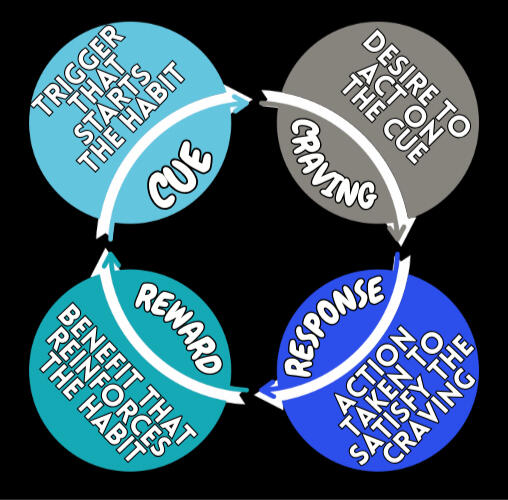
The BasicsThe neuroscientific approach to works by treating drinking as an over-learned habit that needs to be broken and working to rewire our brains and create new neural pathways. This is different from the traditional “talk therapy,” (the 12-step approach) which treats drinking as the symptom of deeper underlying psychological issues, such as unresolved trauma, relationship distress, or emotional patterns. Traditional talk therapy explores why we want to drink based on your history, the neuroscience approach targets how our brains physically react to alcohol.Neuroscience approaches attempt to remove the stigma and feeling of moral failure. The idea is that once we realize a craving is a temporary chemical misfire rather than a personal failing, the urge to drink loses its psychological power. Instead of weekly or bi-weekly sessions as intervention, we begin to manage our brain’s habits and functions on a real-time basis.
THE 4-STEP
NEURO-REBOOT PROTOCOL
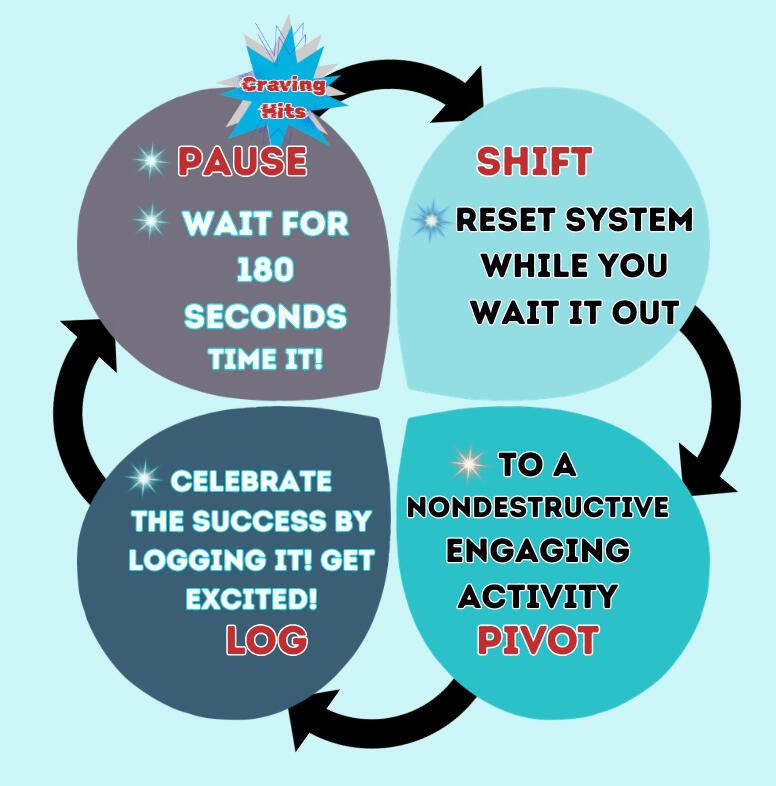
Step 1:
Resonance Frequency Breathing
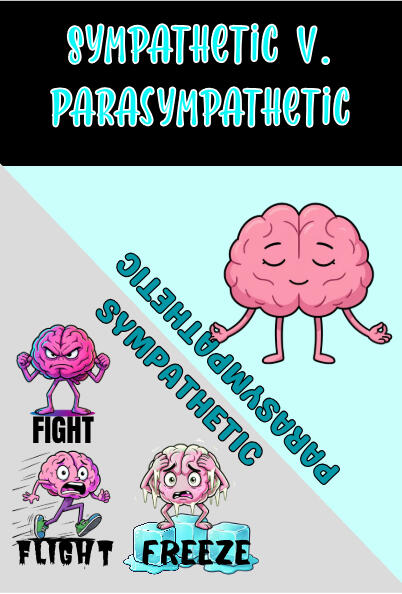
This resets the vagus nerve which controls most of the major systems in your body.) [1] When you get a sudden alcohol craving, your sympathetic nervous system fires up, this causes a mini “fight-or-flight" state of physical anxiety. [1]
The Exercise:
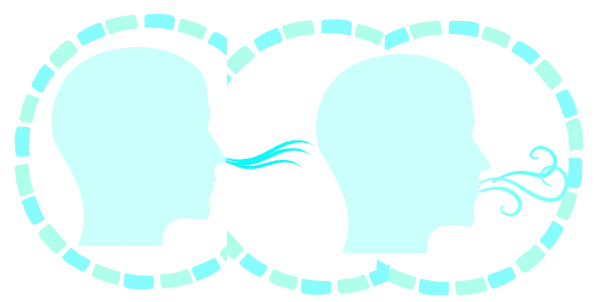
If you complete a 5-minute Resonance Frequency Breathing exercise, you reset this process. It is suggested that you inhale through your nose for roughly 4 seconds and exhale slowly through your mouth for 5 to 6 seconds.
Why This Works:
Long, extended exhales stimulate the vagus nerve. Doing this drops your heart rate and signals your brain that you are safe. By interrupting the craving in this way, it removes the brain’s belief that alcohol is the answer to the mini-panic. [1, 2, 3, 4]
Step 2:
Roll the Tape Forward
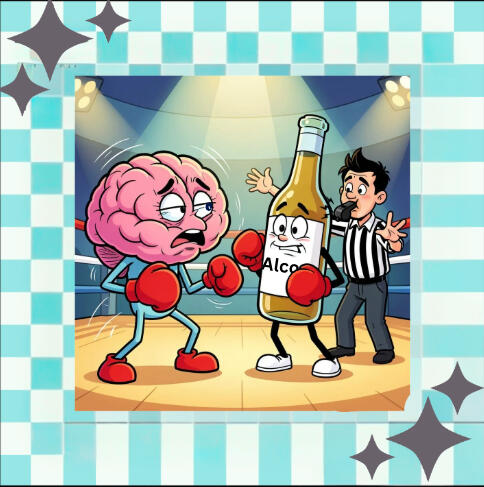
This activates your prefrontal cortex - the decision-making center of your brain.) An alcohol craving happens in the emotional limbic system. This area of the brain lives only in the present and insists on instant gratification. It temporarily shuts down your prefrontal cortex—the part of your brain responsible for logic and long-term planning.

The Exercise:
After you reset your vagus nerve, the next step is to mentally visualize the entire timeline of a drink. This idea of this is to track the experience from the 20-minute buzz all the way to the next-day energy crash, to the 40% drop in heart rate variability (HRV) and disrupted sleep that a single drinking event causes.
Why This Works:
Making yourself think through the long-term physical consequences manually wakes up the prefrontal cortex. This makes the logical part of your brain override the impulse of the limbic system, and breaks the illusion that alcohol provides net positive relaxation. In other words, you realize that the consequences, physically, are not worth it. [1, 2, 3]
Step 3:
Dopamine Substitution
Drinking delivers a massive flood of dopamine to your brain. Quitting alcohol removes the dopamine your brain is used to, and your brain does not like the dopamine deficit. This leaves you feeling restless, bored, and irritable. [1]

The Exercise:
To counter this, schedule and keep track of structured small bursts of physical movement, new hobbies, or outdoor walks before the time you would usually be drinking .
Why This Works:
By exercising or learning a brand-new activity, it stimulates the growth of new brain cells (neurogenesis) and triggers a healthy dopamine release naturally. This teaches your brain’s reward center that it can achieve pleasure and stress relief from everyday, non-chemical sources. [1, 2, 3, 4]
Step 4:
Daily Cognitive Training
If you view quitting drinking as a painful sacrifice or a punishment, your brain will constantly fight against it.

The Exercise:
5-minute daily reading logs paired with immediate "brain dumps" or journaling prompts. Instead of focusing on what you are "giving up," you actively write down what your brain is gaining (e.g., lower next-day anxiety, deeper sleep, better memory).
Why This Works:
Constantly exposing your brain to the raw science of alcohol shifts your identity from "I am a drinker trying hard not to drink," to "I am someone who actively chooses not to put a toxin in my body." Changing these core underlying beliefs builds new neural pathways that eventually turn a conscious, difficult effort into an automatic, effortless lifestyle habit. [1, 2, 3, 4, 5]
Combining the Approaches for the Best Results
Studies show that when a combination of methods are used (also referred to as an "integrated approach" or "multimodal treatment"), the rates of success increase dramatically. [1, 2, 3] Treatment professionals often say, "Treat the biology to stabilize the body, and treat the community to heal the soul" When a person combines the neuroscience method with a 12-step program like Alcoholics Anonymous (AA) or Celebrate Recovery (CR) the high drop out rates decline and success rates increase. [1]
There are some important things to think about when deciding on how you are going to approach your personal recovery.
If you choose to join one of the apps that provides an interface to take you through the neuroscience approach, there can be a significant financial commitment.*
(This factor accounts for some of the high statistics - people are committed because of the financial investment. However, it is possible to follow this method with the free resources available.)
| Metric [1, 2, 3, 4, 5] | Single Approach (AA, CR, or Apps alone) | Combined Approach (Neuroscience + 12-Step Program) |
|---|---|---|
| Initial 30-Day Retention | ~60% (40% drop out early due to white-knuckling or lack of support) | ~85% to 90% (Neuroscience tools stabilize early physical withdrawal, preventing the initial crash) |
| 1-Year Continuous Sobriety | ~35% to 42% | ~60% to 80% (When behavioral therapy/neuroscience is paired with consistent 12-step attendance) |
| Long-Term Relapse Prevention | High susceptibility to stress-induced relapse if a spiritual or social void is left unfilled | Lowest observed relapse rates (The 12-step fellowship satisfies the social/spiritual needs while brain pathways adapt |
The Essential Tools
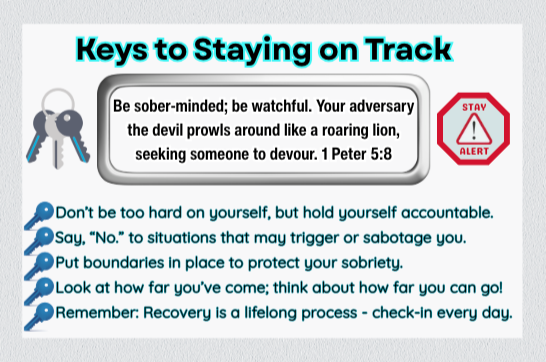
"I can do all things through him who strengthens me." ~Philippians 4:13

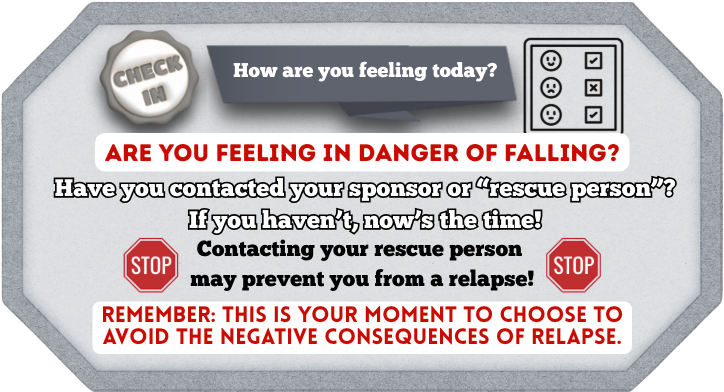
When you're feeling in crisis or having a craving, here are some tools for you!
Remember as you "step" through the program that these are tools for recovery.





Temptation Time-Out!
If you are struggling with feelings that are making you uncomfortable, seek the comfort you need in God's Word.

🛡️ Suit Up: The Armor of God
Let's remember the parts of the armor with this simple mnemonic device.
Sobriety is not won by simply trying harder and is not maintained by accident. True, lasting freedom requires a daily, active commitment to spiritual warfare. In Ephesians 6, God equips us with an unshakeable master defense system to withstand the fiercest waves of temptation. But armor only works if you actually put it on.
Using our structured S.S.S. B.B.H. (S3B2H1) checklist, you can mentally and spiritually suit up before stepping into the day. This isn't a passive exercise; it is your proactive strategy blueprint.Click on each piece of armor below to reveal your core scriptural key and the immediate physical action step required to protect your path today.

Encouragement from the Word
©2026 R. Michael, Sobriety Daily Check-In. All Rights Reserved.